



Story By Barry Kaufman
Blending mountain landscapes with inspired architecture, The Cliffs reflects a community deeply connected to place.
Few things are more prized in today’s world than authenticity. We seek it in the food we eat, the friendships we nurture, and the ways we spend our time. It’s only natural, then, that we also look for it in our homes. We want the places we inhabit to reflect not just who we are, but also where we are.
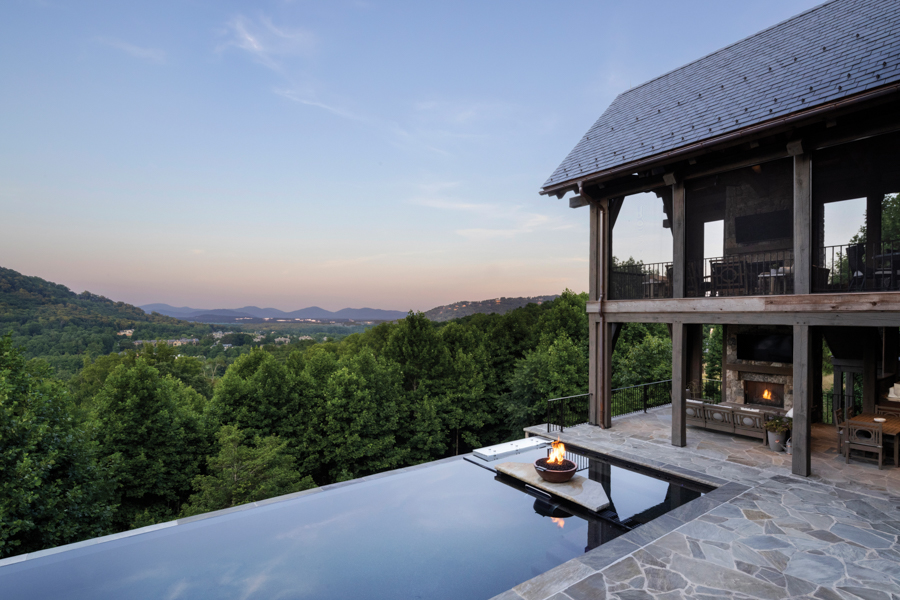
At The Cliffs, this means designing with reverence for a landscape that humbles and inspires in equal measure. Homes are designed not just to be part of the landscape, but to actively enhance and sustain it with a focus on environmentally conscious materials and energy-efficient building practices. Within these peaks and valleys, the built environment carries a responsibility to exist as a harmonious extension of the land’s natural majesty. To be rooted in place, not imposed upon it. Architecture here grows in response to topography, unfolding within the contours and elevations of the terrain. Homes, gathering spaces, and amenities take shape not as plans on paper, but as thoughtful reflections of the land.
The architectural vernacular of The Cliffs reflects this sense of place. But it is also defined by the community, the families who call this place home. “Everything here is about social gathering and generations coming together,” says Richard Seay, Director of Sales for The Cliffs. “And we’re seeing our membership getting younger.” That younger membership, he notes, has a much stronger desire for a more contemporary design.
As design trends evolve, the task of the Architectural Review Board (ARB) becomes a careful balancing act, a thoughtful exchange between the traditions that define The Cliffs and the architectural innovations that will carry it forward. “Our Architectural Review Board has done a wonderful job of allowing for some contemporary homes while still keeping the core tenets of lake and mountain house design.” With each community shaping its own aesthetic, that balance is giving rise to homes that honor a true sense of place while reflecting a deeper authenticity.
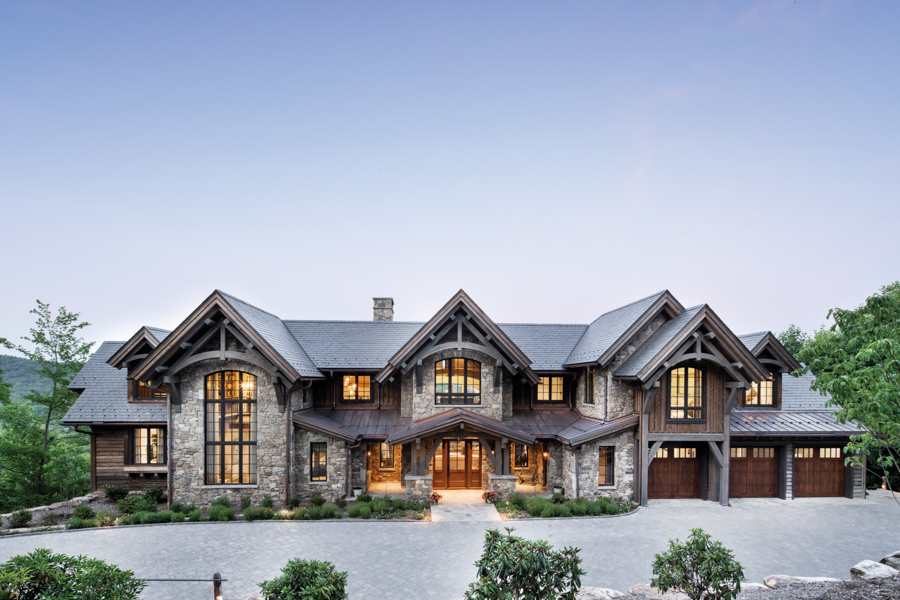
The Cliffs at Walnut Cove
“A community’s strongest statement is the architectural quality of its homes. The degree to which The Cliffs at Walnut Cove is integrated with its rural mountain atmosphere is dependent on the design and setting of each home. An environmentally sensitive design can only be achieved through a careful, well-thought-out response to your particular lot, and the vegetation and topography of the building site.”
–The Cliffs at Walnut Cove Architectural and Construction Guidelines
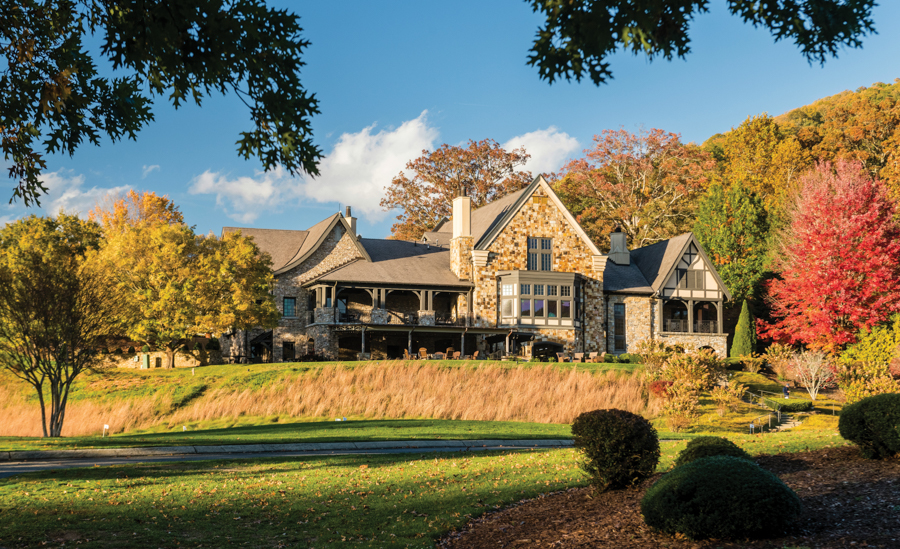
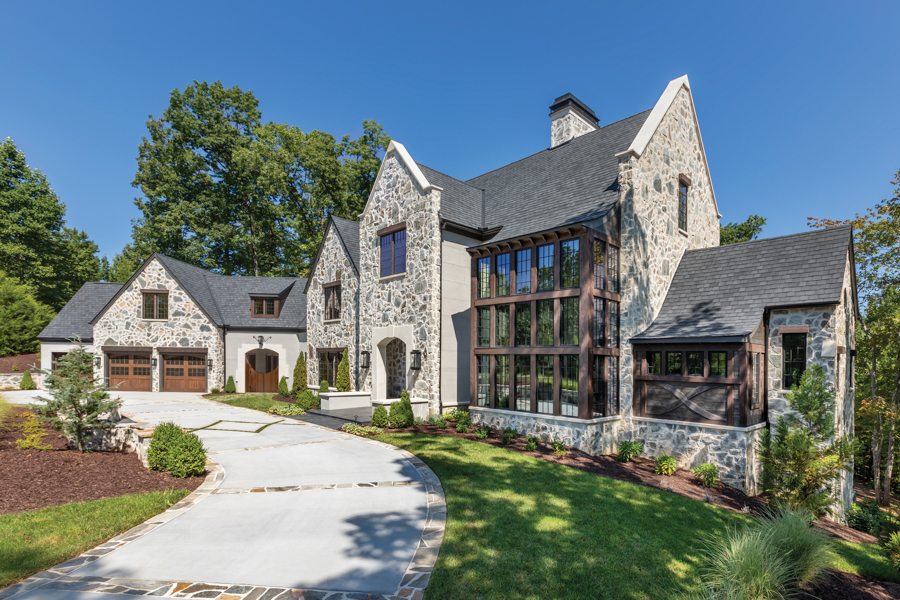
Within The Cliffs, perhaps no individual community expresses the timeless tenets of mountain architecture with more genuine care than Walnut Cove. As reflected in the soaring rooflines, Tudor influence, and natural stone and brick of the golf club, the overarching motif is one of alpine serenity. Residents have embraced this timeless ethos, even codifying it with modifications to ARB guidelines in 2016.
“We asked the community at that time to fill out a survey, and they all wanted to keep those more traditional elements with stone exteriors and metal roofing of copper or other high-quality material,” said Courtney Stone-Lipscomb, Director of the Architectural Review Board for The Cliffs. “But there is a little room for more contemporary styles of craftsman prairie homes. You have to have 20 percent stone on each side, and the roof pitches can’t go as low as other communities,” she explains. “But you can have big glass or steel accents for a more modern look.”
The stone requirement, enacted as part of the 2016 updates, keeps Walnut Cove firmly rooted in the style of traditional mountain homes. But within those boundaries, architects have been able to coax out a subtle sense of transition, with expansive eaves, cantilevered accents, and expansive window packages that evoke a bold new spirit in mountain design.
Where these architects and builders have shown their true genius is in the way each home, no matter what new elements they incorporate, still feels like part of a cohesive community. “You can see how the amenities and townhomes have those Tudor elements running throughout as well as some of the original developer products,” said Stone-Lipscomb. “That was the theme, but then as time moves on and trends come along, we’ve seen hints of even West Coast elements.”
Designing at Walnut Cove means working with dramatic mountain terrain. Steep slopes and natural contours inspire homes that feel rooted in place, with stone, timber, and glass blending seamlessly into the Blue Ridge Mountains. Each residence reflects both structural ingenuity and timeless mountain style, creating a community where architecture and landscape are inseparable.
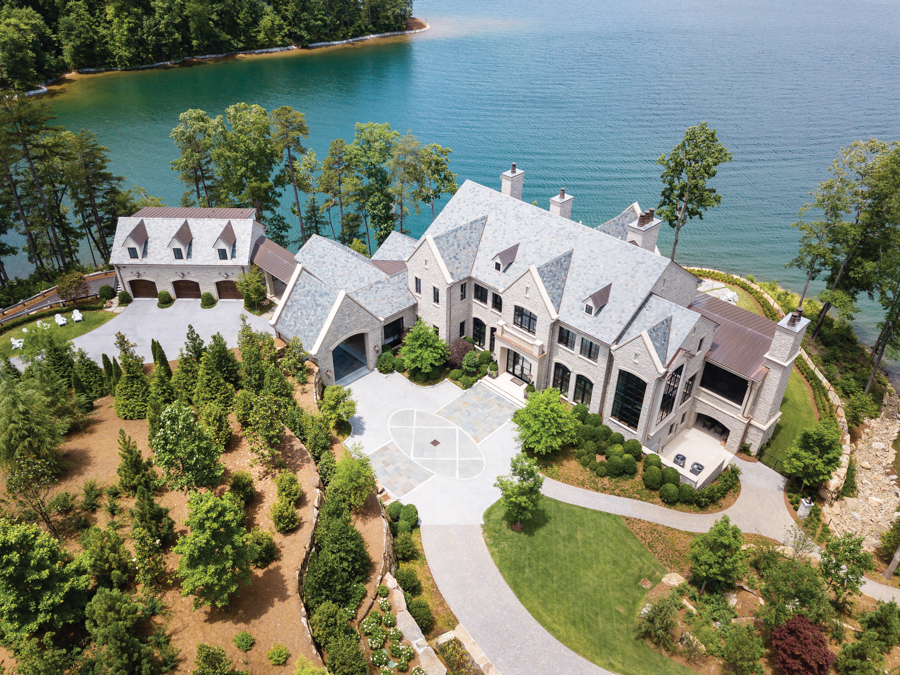
The Cliffs at Keowee Springs
“Environmentally conscious design is celebrated by using broad-sheltering roofs, low overhangs, expansive eaves, operable doors and glass, shading screens, shade from deciduous trees, and proper orientation for sun, wind, light, and shelter. The Cliffs at Keowee Springs seeks to create architecture that stands in harmony with nature.”
-The Cliffs at Keowee Springs Architectural and Construction Guidelines
With its lakefront setting, Keowee Springs was always destined to stand apart from its sister communities at The Cliffs. While still unmistakably rooted in the mountains, the homes here draw from a broader palette of inspiration, from the American piedmont to Frank Lloyd Wright–style mountain prairie design.
“At Keowee Springs, we are calling for a more modern blend of architecture,” said Stone-Lipscomb. This is not your grandparents’ lake house.
Without specifically endorsing any particular period styles, geographic influences, or historical approaches, the driving aesthetic at Keowee Springs is one in which homes reflect a scale and style that embraces the magnificent waterfront of Lake Keowee.
At Keowee Springs, you’ll find steel and glass joined by stone and wood, homes marked by broad overhangs and strong eaves to soak in lakefront scenery.
“With new technology and techniques, it’s amazing what builders are able to do now,” said Seay. “More modern mountain design is making its way into each of our communities, but we have never lost, nor will we ever lose, that classic mountain house influence.”

The Lake Club at Keowee Springs, designed by Lake Flato Architects, redefines lakefront living. Broad rooflines, glass walls, and natural materials echo the shoreline, blurring boundaries between indoors and out. More than an amenity, it sets the tone for the contemporary architectural vernacular for Keowee Springs—welcoming, innovative, and in harmony with its spectacular waterfront setting.
The Cliffs at Mountain Park
The Cliffs at Mountain Park introduces a more contemporary architectural palette that unifies the man-made with nature and elevates the everyday to spectacular… The homes in The Cliffs at Mountain Park should be considered as a part of the overall community rather than being viewed as individual structures.”
-Excerpt of The Cliffs at Mountain Park Architectural and Construction Guidelines
From its very inception, The Cliffs at Mountain Park was never meant to be a monolith. Nowhere is this more visible than in its amenities, where a vibrant blend of architectural styles each tells a different story. In The Cabin’s rustic allure, we see an unfettered dedication to classic, simple mountain design scaled up to glorious heights. In the contemporary brise-soleil across the front of the Keith Summerour-designed Sports Pavilion, we see iterations of intriguing architectural forms. And in the residences that stretch away from the golf course, we see a Tuscan influence that belies a willingness to throw out all the rules.
“Gary Player designed the golf course, and he wanted that more modern, South African feel,” said Stone-Lipscomb. That blend of influences creates an eclectic yet unified atmosphere in the communal spaces that filters out into the community through homes that are distinctly mountain cottages, but crafted to more modern tastes. “Overall, I’d say the look in Mountain Park is a mountain cottage feel but with a grander sense of scale and with high-pitched roof lines.”
This manifests in homes that draw inspiration from classic prairie craftsman-style mountain homes, with peaked gables and natural finishes that blend into the natural surroundings. Here and there, you’ll find a more modern window package of tall glass, but for the most part, Mountain Park homes are all about the scenery.
“You definitely enjoy big flashy views here. You walk out your front door and you get multiple views of a variety of ranges right from your house,” said Stone-Lipscomb. This inspirational setting encourages residents to keep it simple when it comes to the structures they build.
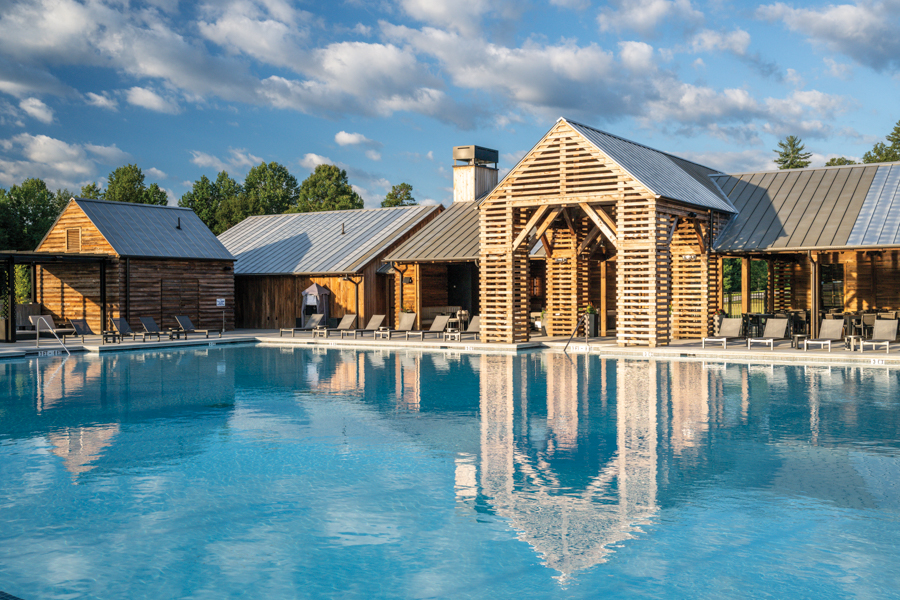
Mountain Park’s character shines through its amenities as much as its homes. The rustic Cabin nods to classic mountain tradition, while the striking Sports Pavilion brings a contemporary edge. Together, they create an architectural language that balances heritage with innovation, uniting neighbors in spaces designed to both gather and celebrate the surrounding scenery.
This story was featured in Cliffs Living magazine. To see more stories like this one and learn more about The Cliffs, subscribe here.