


Story by Hailey Wist
Language in the South has always been more than communication; it is texture, rhythm, and inheritance.
These sayings are born from heat, hospitality, and a way of life shaped by kinship. Many of the region’s most recognizable expressions began with Scots-Irish settlers, blended with African American vernacular traditions, and settled in through generations of storytelling. Today, they are part of the landscape—phrases that may draw a laugh, soften a truth, or signal familiarity.
Take “fixin’ to,” perhaps the most quintessential Southern future tense—“I’m fixin’ to go fishin’.” Life in this region isn’t rushed; it bends around daylight, weather, and the rhythms of home. “I’m fixin’ to go” nods to that inheritance—time can wait a moment, and there’s no need to hurry what will unfold anyway. “Bless your heart” is another expression that reflects the South’s layered emotional code. At its warmest, it is comfort, an acknowledgment of hardship or frustration. Yet it can also serve as a polite buffer for criticism—a way to maintain grace while still telling the truth. The duality is the point. Southern language often carries kindness on the surface, complexity beneath.
From the farm and field comes “That dog won’t hunt,” a phrase that once described a hound unable to work but now applies to any idea lacking sense or substance. Southern speech has a reputation for being slow or lyrical, but phrases like this prove it has always prized clear judgment earned from experience. On the more playful end of the spectrum sits “catawampus,” meaning crooked or slightly off-center. The word likely evolved from a blend of early American slang and Scots-Irish sound patterns, shaped by a culture that enjoys the feel of language as much as meaning itself. Southern phrases are memorable not just for what they express but also for how they land in the mouth—rhythmic, and sometimes humorous.
And then there is “grinnin’ like a possum eatin’ a sweet tater,” an expression rooted in the region’s close familiarity with its natural world. The image is specific, vivid, and entirely local. Southern language often comes from what was observed long before it was written down. It captures satisfaction with a kind of unselfconscious delight; the South has always known how to savor joy. “Sweatin’ like a sinner in church” ties together climate and culture in a single phrase. The Southern summer is legendary, and the church is a longstanding social anchor. The humor acknowledges both without judgment: everyone is human, everyone is hot, and everyone is trying their best to stay composed.
Together, these expressions tell a story. They reflect a place where speech is slow not because thought is slow, but because words are chosen with care. They carry memory, humor, and history—a living lexicon shaped by land, work, community, and time. Even as the South continues to evolve, these sayings endure, out of nostalgia, but also because they continue to fit the world they describe.
Common Southern Sayings
“Fixin’ to”
does not simply mean about to. It signals preparation, intention, and the acknowledgment that movement begins in the mind before the body follows.
“He’s too big for his britches”
cuts pride down to size without raising its voice.
“Hold your horses”
offers a gentle break—make some space between decision and action.
“Don’t poke the bear”
is as much wisdom as warning—choose your battles, and choose them sparingly.
“Hush your mouth”
is a phrase that is less about silence than about tone—a signal that something is better left unsaid, at least for now.
“Slower than molasses in January”
remembers a time when molasses thickened in a cold pantry and simply had to be waited on.
“Full as a tick”
is the kind of observation born from looking closely and knowing there’s a particular kind of fullness that leaves no room for more—literal or otherwise.
“Gimme some sugar”
isn’t about sweetness; it’s about familiarity, affection, the greeting of kin.
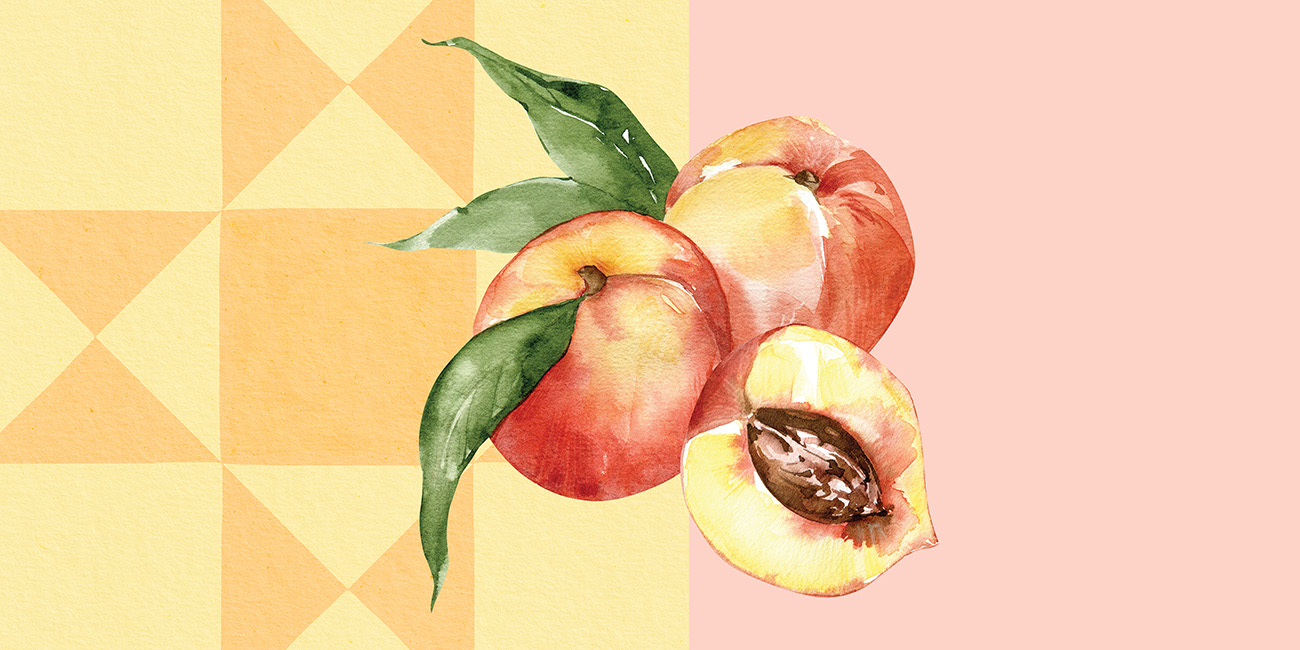
“As pretty as a peach”
is both a compliment and a regional emblem—beauty measured in color, softness, and ripeness of the moment.
“Y’all”
(and its emphatic cousin, “all y’all”) may be the most democratic word in the Southern lexicon. It is an answer to a grammatical gap—a plural you that gathers people in. “Y’all” is inclusive by nature, warm without being familiar, efficient without being abrupt. And when clarity truly matters, “all y’all” leaves no one behind—an unmistakable widening of the circle.
This story was featured in Cliffs Living magazine. To see more stories like this one and learn more about The Cliffs, subscribe here.