


Story by Stephanie Hunt
At The Cliffs, some of the country’s leading architects are demonstrating how thoughtful architecture can enrich community living and the way we inhabit it.
To enter a building is to step into a dream. After all, that’s where most buildings begin: in the swirl of Sunday afternoon post-nap musings. On a walk in the woods or around a lake, the mind wildly wandering. With curious jottings on the back of a cocktail napkin. The dream is sketched out on paper and refined through a 3D CAD rendering, eventually evolving into blueprints. Then, finally, nail by hammer by foundation pour, that dream becomes reality. Somehow, those initial sketchy scribblings coalesce into floor joists and framing, and voilà, a building. “Architecture is not based on concrete and steel and the elements of soil. It’s based on wonder,” said the Polish-American architect Daniel Libeskind. And when that wonder is activated, when architects dream big, that built reality—the roof overhead, those soaring ceilings, those interior and exterior spaces—retain their sense of wonder.
That’s the goal at The Cliffs, where South Street Partners has tapped some of the country’s leading architecture firms to dream boldly while creating the marquee public buildings anchoring The Cliffs communities. “The remarkable landscapes which unfold across The Cliffs seven communities are a constant source of inspiration and present endless opportunities to weave buildings into these spectacular natural settings,” says Chris Randolph, managing partner at South Street Partners. Across their portfolio of properties, South Street Partners works to ensure the built environment blends seamlessly with the natural environment, enhancing quality of life and the community’s sense of connection and wellness. At The Cliffs, this is evident in the thoughtful designs behind The Cliffs at Keowee Springs Clubhouse, designed by Hart Howerton; The Lake Club at The Landing, designed by Lake Flato; and the new Sports Pavilion at The Cliffs at Mountain Park, designed by Summerour Architects.
Not Your Grandad’s Clubhouse
HART HOWERTON
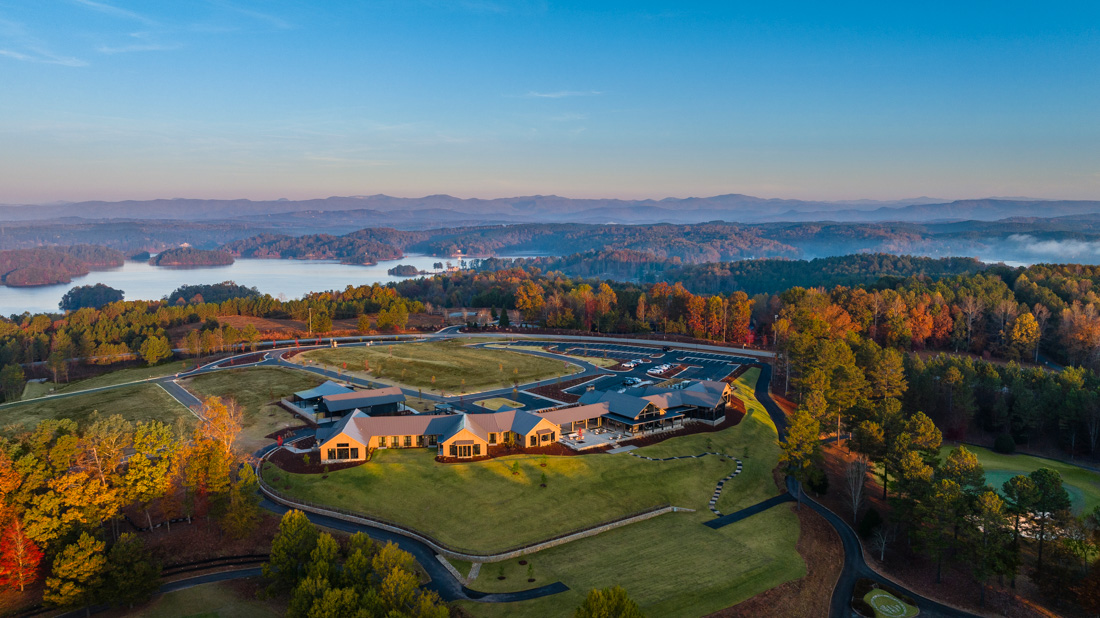
According to the architects at the New York- and San Francisco-based firm Hart Howerton, it’s time to rethink the “clubby” clubhouse. The days of dusky interiors, heavy drapes, and rooms filled with the aroma of cigar smoke are in the past, giving way to more modern offerings like pickleball, padel, and yoga with stunning mountain views right outside.
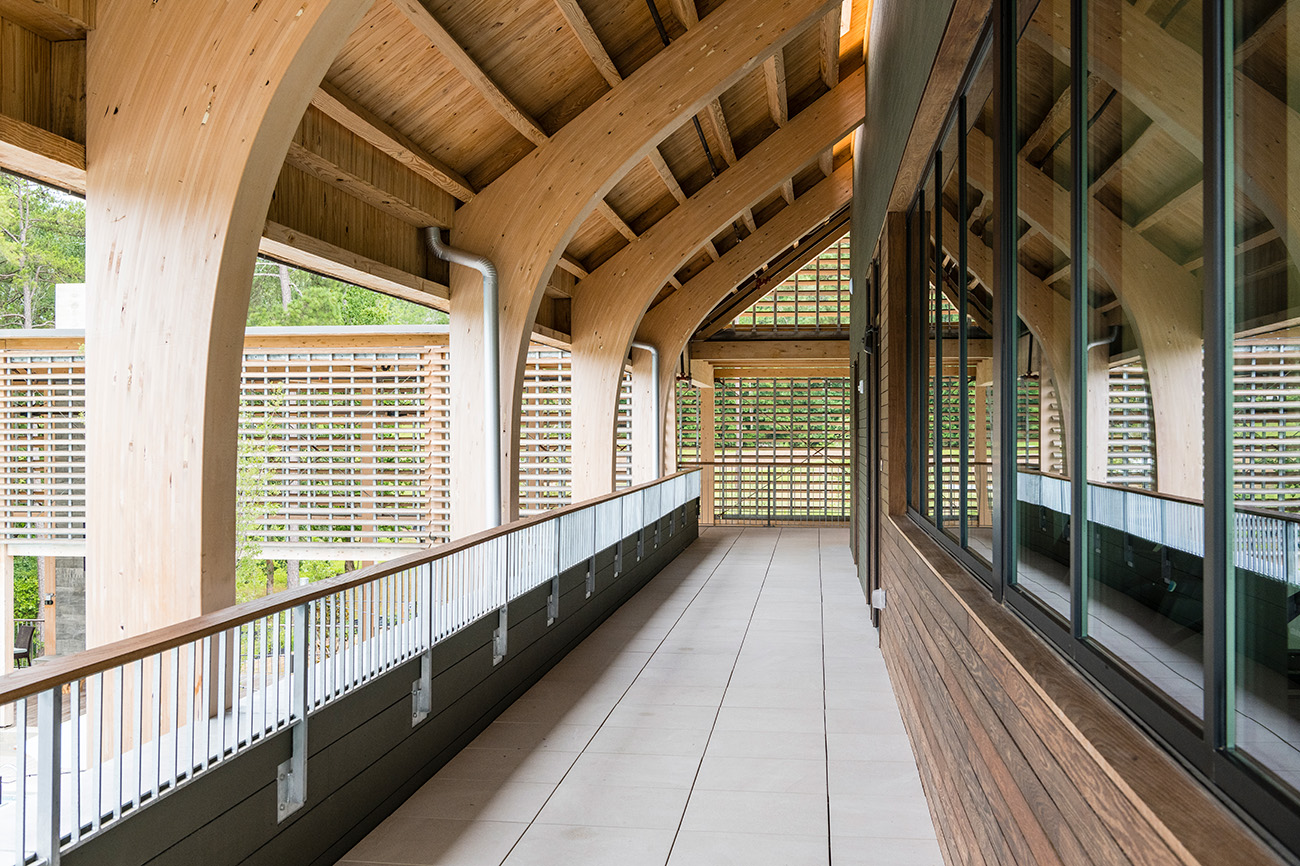
Instead of closed off and closed in, the Hart Howerton team envisioned the new Keowee Springs Clubhouse as an open—and open-air—invitation to awe. The hilltop site overlooking the 18th hole had already been selected and cleared when Hart Howerton was brought on. Upon seeing the panoramic view, the firm capitalized on the abundant natural light and spectacular vistas to create a dynamic gathering spot for family-focused experiences. “We are an interdisciplinary firm—we do master planning, landscape architecture, and interiors, as well as building architecture—so we’re always thinking as much about the outdoor rooms as the indoor,” says Tim Slattery, partner at Hart Howerton. “We wanted people to feel they were arriving not to a building but to nature. The breezeway creates an arrival experience, opening through and into the building, which then opens onto a courtyard framing the view.” Poured-form concrete pillars give depth, while wood beams and a metal roof make for the muted exterior, “a quietness that blends with the landscape,” adds Slattery, “then on the inside, there are pops of color, the light and darker blues, and big windows everywhere.”
Slattery and his colleague Louise Le Gardeur envisioned the clubhouse as the “great room” for the broader community, a central gathering spot where members can come for Pilates in the morning, grab a latte and a barstool to catch up with friends at the sunny blue and white coffee bar, then return later for a sunset cocktail and dinner in one of the various dining rooms. Or, better yet, stay all day, enjoying the fitness room, conversations on the patios, or reading in the library. A hinged window in one bar opens to an outdoor patio in good weather. Kids can run around in the courtyards, while adults relax at the wine bar. “We wanted a variety of spaces connected by breezeways, a plan that’s inviting and intimate for the couple having a quiet dinner in the off-season and works equally well when the whole membership is here for a Fourth of July barbecue,” says Slattery.
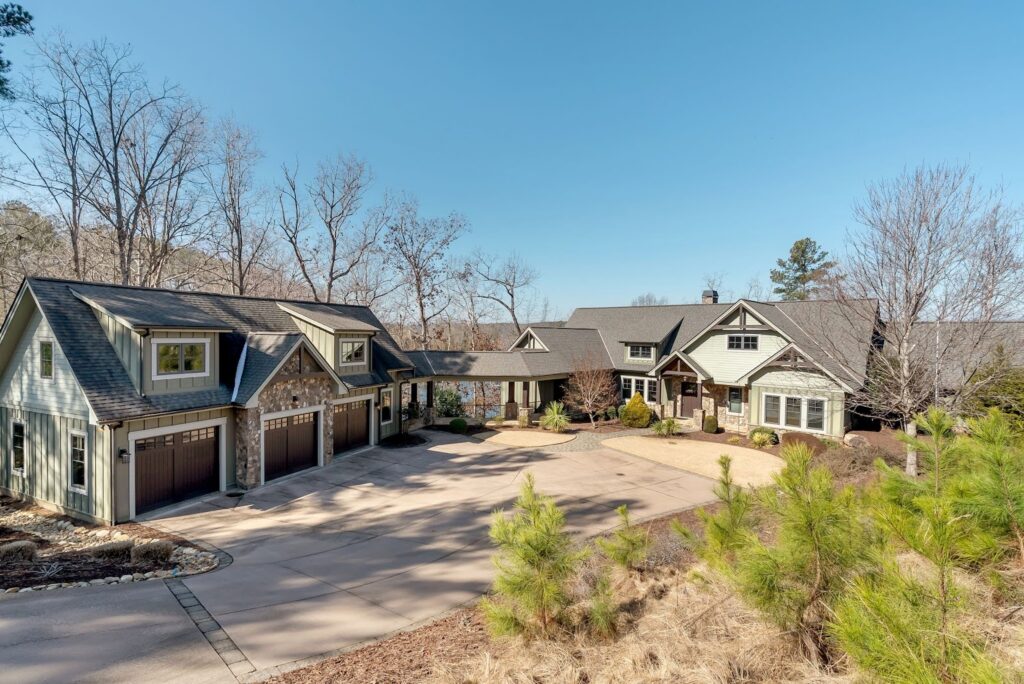
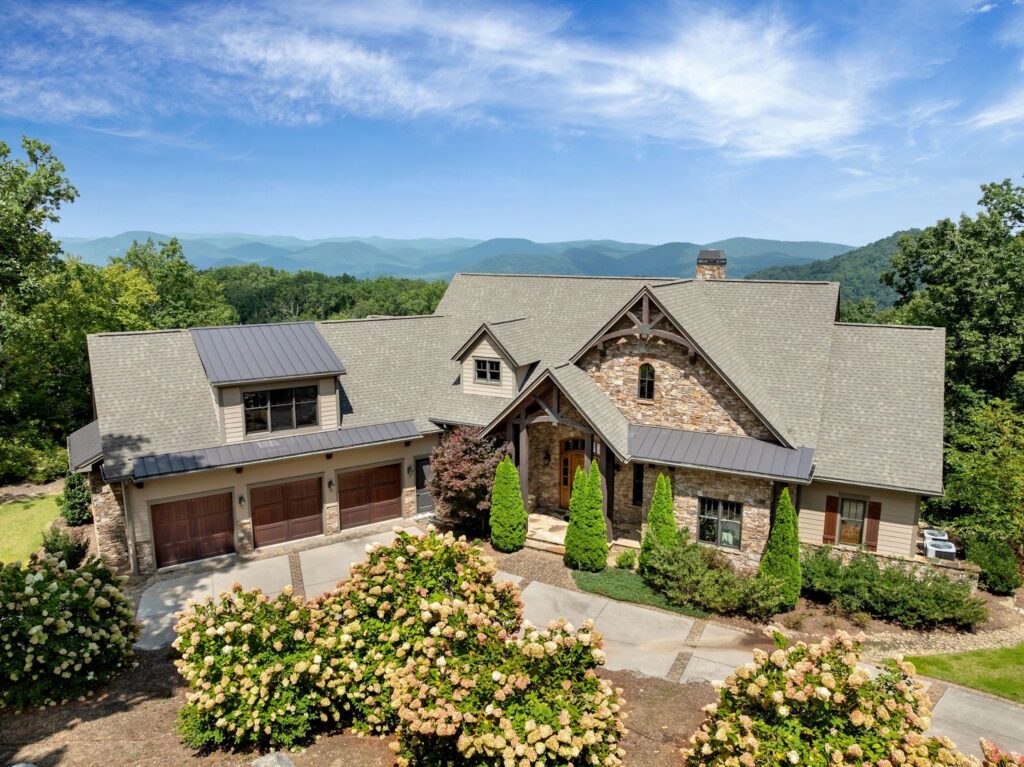
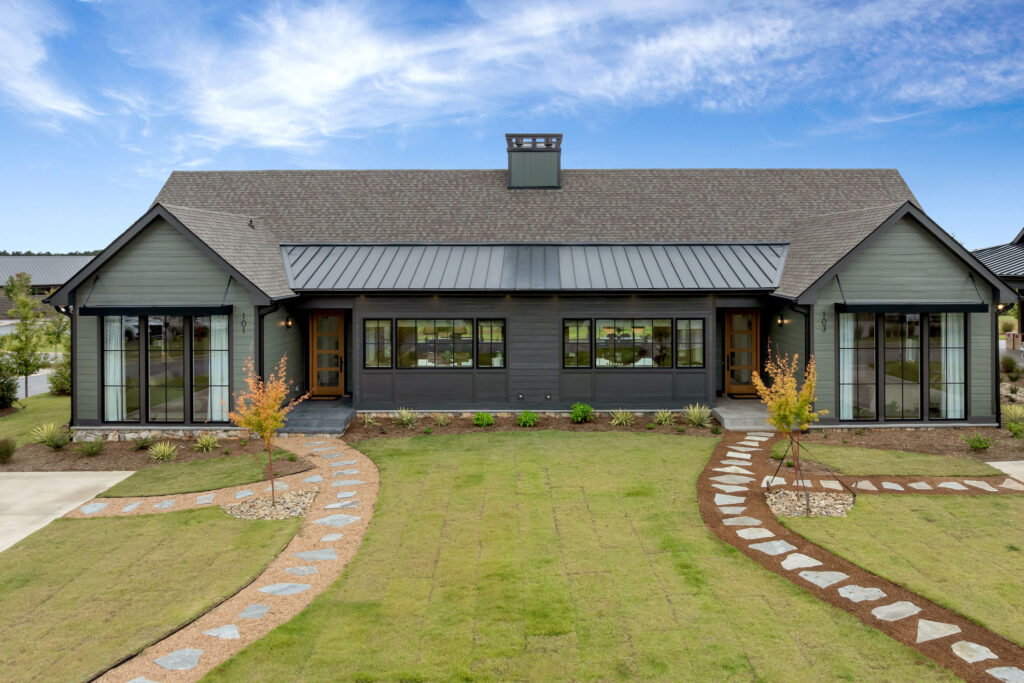
Hart Howerton also designed residences at the adjacent Clubhouse Village. “We respected the vernacular of the area,” says Le Gardeur. “The homes all have a connection to the outdoors and a nod to traditional materials and colors, but are a little lighter and brighter, because that’s what people want and need these days. We’re so often in front of our computers, what we’ve designed offers a relief, with more connection to the outside, lots of porches and gardens.” The cohesively designed homes at Clubhouse Village are all about being energized by the outdoors, promoting walkability and bicycling with their proximity to the clubhouse pavilion and nearby amenities.
Boat Slips and Tree Tops
LAKE FLATO
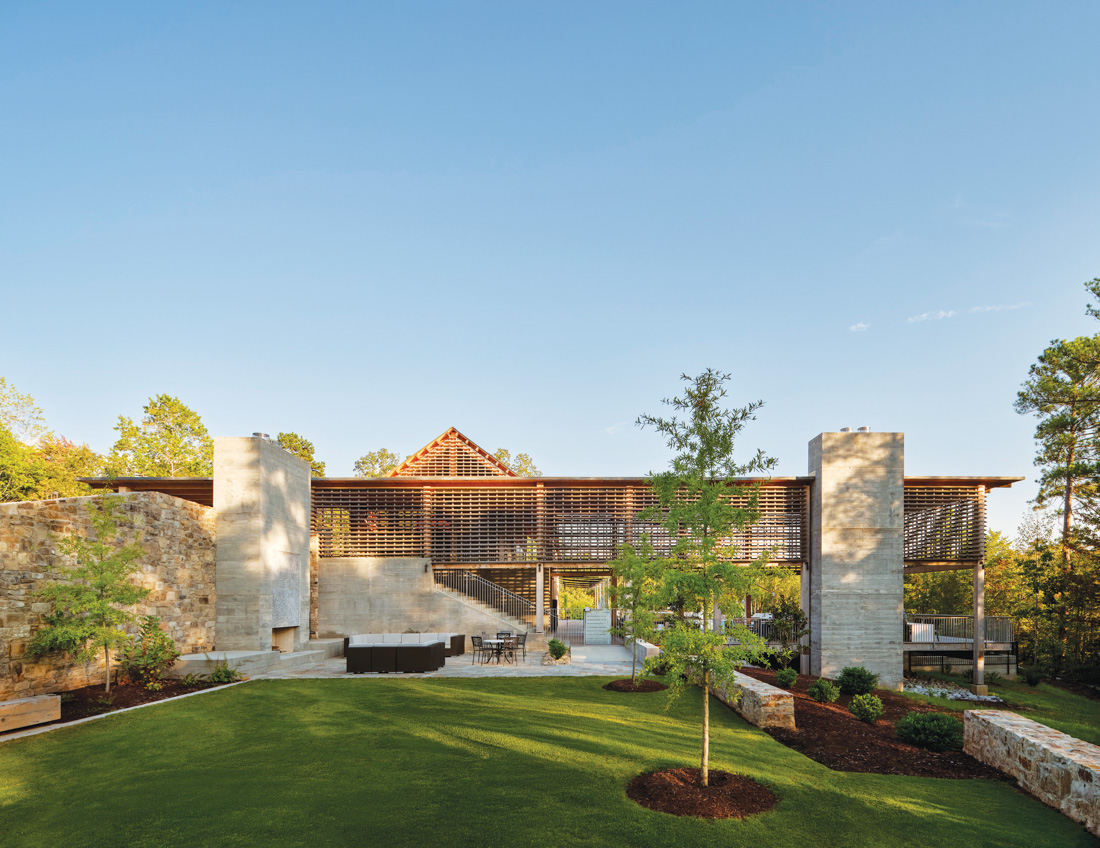
Below the hills and lapping the shore of Lake Keowee, The Lake Club at The Landing, designed by the Texas-based firm Lake Flato, similarly takes its cues from the natural setting. The Lake Club is smaller than the clubhouse, but no less loaded with thought and intention. “We envisioned The Lake Club as a threshold to the water’s edge, framing the community recreation space while nestling it amidst the lakeshore landscape,” says Graham Beach, Lake Flato’s lead architect on the project. A series of boardwalks, pavilions, and pools terrace down the slope leading to Lake Keowee and a protected swimming cove. The pavilion’s vertical timber structure, with honeyed exposed beams beneath a metal roof and a modular wing of elevated horizontal wood slats, hovers above the land, treehouse-like, echoing the serene, wooded surroundings and rooting the architecture in the forested landscape. Inside are changing rooms, a restaurant, and a fitness facility. “The structures offer breezy shade during the day and are an inviting spot for a drink by the firepit at night,” says Beach. “It’s all about comfortable places to come together, relax, and maybe splash around a bit, while still feeling connected to the land.”
At the lake, boat slips make watersports readily accessible, with the lakeside Paddle House offering a convenient gathering spot and point of arrival or departure for water activities. Lawns and trails connect the pavilions to the Waterscape community of lakeside homes that Lake Flato also designed as part of the master plan. “Density here is desirable,” says Beach. “These two groups of unique residences in proximity to each other and The Lake Club add vibrancy and support the fabric of the community.” To the east is The Cove, where clustered homes share outdoor spaces and a generous lawn, perfect for group picnics, events, or fierce bocce competition.
To the north side of The Lake Club, The Treetops homes are nestled among the tall pines, with expansive windows offering views of the lake and surrounding woods. All the homes feature open kitchens and familyoriented living spaces, some with bunk rooms and lofts, and screened dining porches overlooking Lake Keowee. A network of trails leads to the dock and the clubhouse. “We designed this lakeside community for exploration and connection, both to fellow neighbors and to the outdoors,” Beach says.
Game On
SUMMEROUR ARCHITECTS
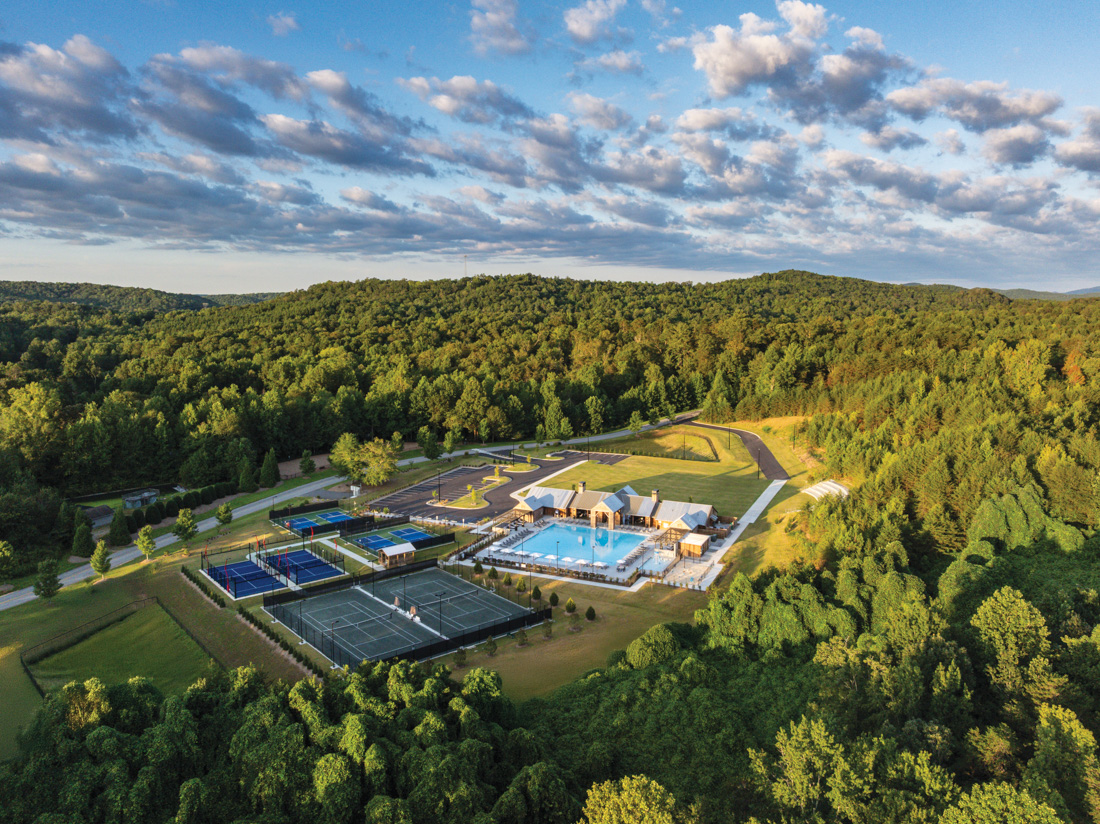
When South Street Partners tasked Keith Summerour of Atlanta-based firm Summerour Architects with designing a new Sports Pavilion for The Cliffs at Mountain Park, Summerour drew inspiration from the region’s history. “Because of the hills and steepness in the Upstate, farms here tend to be smaller and the settlers’ barns not as large as elsewhere in South Carolina. We modeled the Sports Pavilion on that scale, a building that feels agrarian but approachable, with a cleverness in the use of materials associated with a barn,” Summerour says. “We wanted it as open-air as possible, so when you enter through a tall one-story portal, it looks like a foyer without doors, like a deconstructed barn or house.” There are openings where windows would go, but no windows—it’s all open air. Horizontal slats form the entranceway, and those deconstructed columns do double duty as lighting in the evening. “We placed garden lights inside the columns, and when the light hits the slats, it spills out to the surrounding area,” he adds. “The result is an interesting, romantic reflection in the water, which makes it feel different at night than during the day.”
Summerour wanted the Sports Pavilion architecture to “touch the water as closely as possible,” which reflecting light helps achieve. “These lit columns of slats magnify the effects of the water, and anytime you have a watering hole and an ability to cook or entertain next to it, that’s going to be a magnet. We want to draw people here, and entice them to stay.” Summerour’s design also incorporates indoor space for fitness and dining, while tennis, pickleball, and padel courts, along with other sports amenities, complete the complex. “Health is the new luxury,” he adds, and social interaction is as much a component of health and well-being as physical activity. To that end, Summerour designed spaces that both honor nature and nurture community. “Instead of a pool that’s wide open, we wrapped cabanas around the arbors, so sunbathers and swimmers feel less exposed. Those sheltering principles make people feel more comfortable,” he says.
As Summerour, Beach, Slattery, and Le Gardeur all know, “a design isn’t done until someone is using it,” as noted interactive designer Brenda Laurel once said. That’s why Summerour hopes for time to sit poolside at the Sports Pavilion, maybe sip a drink, and observe how long people linger, how they move about enjoying different aspects of the club. “My hope is that they stay all day,” he says.
Creating spaces where relaxed, happy people can enjoy being together in a sublime mountain setting was the goal, and by all accounts, these architects have achieved it. The proof isn’t in the pudding as much as in the pools and pavilions, and in the laughter emanating from them. In the smiles of members milling about the courtyard at the Keowee Springs Clubhouse, or sharing a meal at the Sports Pavilion, or meandering along the trails at The Landing. The proof is how these thoughtfully designed spaces define the public realm and even private residences at The Cliffs, fostering a sense of well-being and communal connection. Or how, as Winston Churchill once quipped, “We shape our buildings; thereafter they shape us.”
This story was featured in Cliffs Living magazine. To see more stories like this one and learn more about The Cliffs, subscribe here.