


Story By Hailey Wist
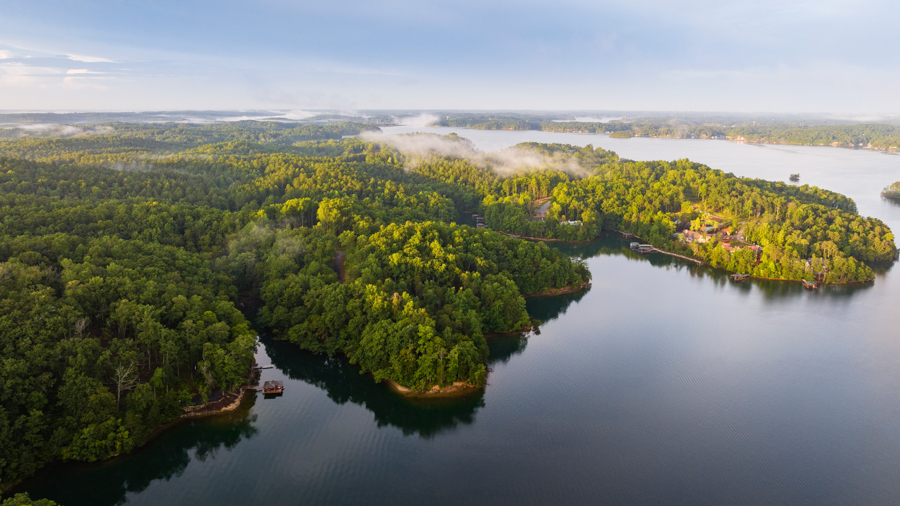
Tucked into the foothills of the Blue Ridge Mountains, where misty ridges roll into deep hollows and streams meander through granite-carved valleys, lies Lake Keowee. Today, this crystalline reservoir draws boaters, anglers, and sunseekers to its shores, but Lake Keowee’s story stretches far deeper than its 297 miles of shoreline suggests. It is a tale of stone, time, and the movement of people and power across centuries.
Geologically, the land beneath Lake Keowee is ancient—among the oldest exposed rock in North America. The Appalachian Mountains began forming almost 480 million years ago in a series of continental collisions, thrusting up ranges and folding the Earth’s crust. As time weathered these mountains down, rivers cut through gneiss, schist, and granite, creating the ridges and valleys of what we now call the Piedmont. The Keowee River, a tributary of the larger Savannah River system, eventually carved its course through the terrain, its waters fed by mountain springs and seasonal rains.
For thousands of years, this landscape supported rich biodiversity and provided for its earliest human inhabitants. The forests teemed with black bears, white-tailed deer, and wild turkeys. The rivers ran thick with fish and freshwater mussels. It was a fertile, generous place long before dams, docks, and people flourished here.
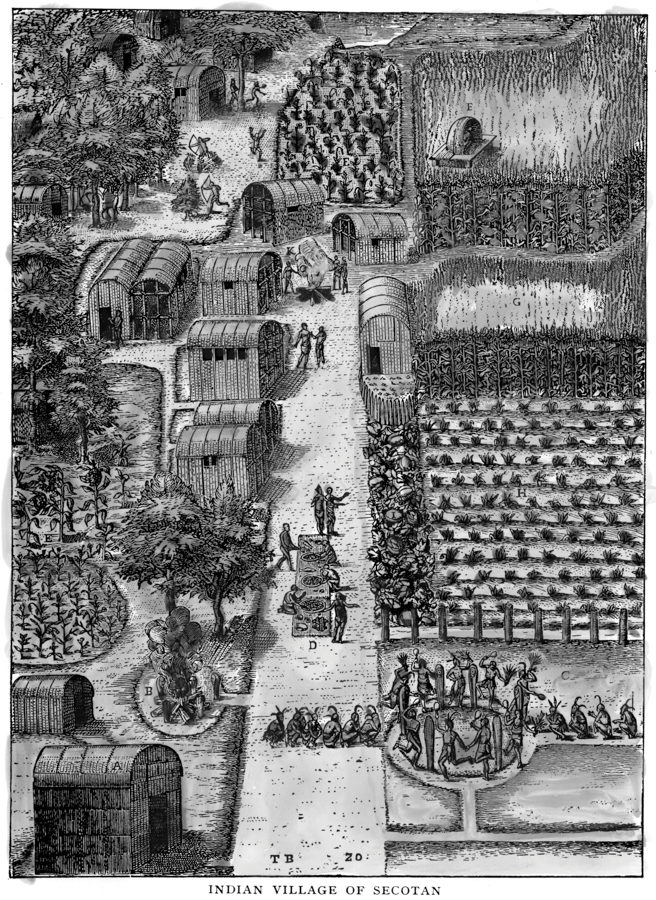
By the time Europeans arrived in the sixteenth and seventeenth centuries, the region was home to the Cherokee, whose ancestors had lived in the Southeast for millennia. The Cherokee Nation was expansive, and the Lower Towns of the Cherokee were concentrated in what is now northwestern South Carolina. One of these towns was Keowee—an anglicized version of a Cherokee word meaning “place of the mulberries” or “place of the lean-to.”
Keowee was not only a thriving village but also a political and cultural center. The town served as a strategic hub for trade and diplomacy between the Cherokee and European settlers. Archaeological excavations in the area have uncovered pottery, tools, and other artifacts that suggest evidence of a complex, vibrant society.
Yet the relationship between the Cherokee and the settlers was fraught. Treaties were signed, broken, and rewritten. Conflict was frequent, particularly during the French and Indian War and later during the American Revolution. By the early 1800s, under pressure from encroaching settlers and federal policy, the Cherokee were forcibly removed from the region.
For over a century afterward, the Keowee River Valley remained largely rural—forested, dotted with small farms, and stitched together by country roads and sleepy towns. But in the mid-twentieth century, a dramatic transformation was set in motion. The post-World War II boom brought industrial expansion, and with it, an insatiable demand for energy.
Enter Duke Power Company (now Duke Energy). In the 1960s, Duke sought to meet the rising energy needs of the Carolinas through a series of hydroelectric and nuclear power projects. The Keowee-Toxaway Project was born. Its centerpiece was the construction of a large reservoir that would not only generate hydroelectric power but also serve as a cooling source for nuclear reactors.
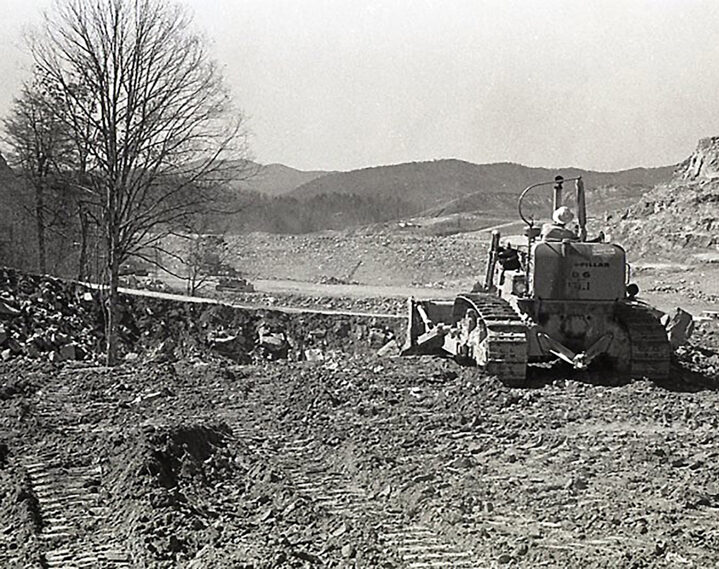
Construction began in 1967, with the Keowee Dam and the Jocassee Dam (feeding into Lake Jocassee, which in turn feeds Lake Keowee). The creation of the lake required flooding the old Keowee River Valley. Entire tracts of land, including homesteads, roads, and even cemeteries, were purchased, relocated, or submerged. By 1971, Lake Keowee began to fill.
Duke Energy still owns and manages Lake Keowee. It is both a source of hydroelectric power and an integral part of the energy infrastructure supporting the Oconee Nuclear Station. Its waters are carefully monitored for temperature, flow, and environmental impact. But while its purpose is utilitarian, Lake Keowee has become so much more.
At The Cliffs, we recognized early on that Lake Keowee is the backdrop for an extraordinary way of life. With its crystal-clear waters and the majestic Blue Ridge Mountains rising in the distance, this lake has become one of the Southeast’s premier lifestyle destinations. We’ve thoughtfully developed our lakefront communities to reflect that natural beauty, offering refined living with direct access to the lake, golf courses, marinas, and several world-class amenities.
What’s more, zoning laws, shoreline management programs, and conservation partnerships have helped maintain a level of environmental quality that stands out among man-made lakes. Duke Energy operates under a Federal Energy Regulatory Commission (FERC) license that includes requirements for environmental stewardship, recreational access, and historical preservation. At The Cliffs, we are proud to be stewards of Lake Keowee, working in tandem with Duke Energy’s conservation programs to preserve its natural beauty. Our development practices are thoughtfully designed to maintain the lake’s ecological balance while enhancing the lifestyle experience for our members and residents.
At The Cliffs, we are proud to be stewards of Lake Keowee, working in tandem with Duke Energy’s conservation programs to preserve its natural beauty.
Today, Lake Keowee stretches over 18,000 acres and reaches depths of more than 150 feet in some places. Its water remains notably clear, thanks to the surrounding forested watershed and the granite-rich soil. On a summer morning, the lake can be as still as glass, save for the swoop of an osprey or the churn of a kayak paddle. Loons occasionally drift through during migration, and bald eagles nest on the lake’s islands and coves.
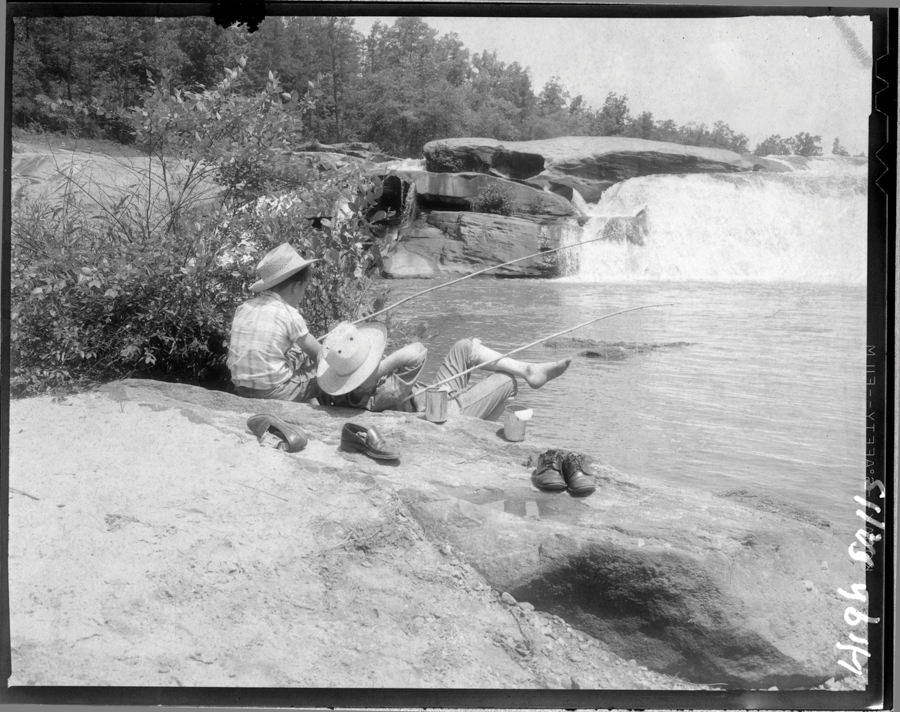
Underwater, bass and bream dart among submerged tree stumps and rocky shelves. In spring, anglers wade into the shallows in pursuit of trout and crappie, while pontoon boats idle lazily near the shore, music floating across the water. At sunset, the lake takes on a copper glow, reflecting the silhouettes of Appalachian peaks.
Though shaped by human hands, Lake Keowee has, in many ways, reclaimed its identity as a place of peace, refuge, and connection to the natural world. Its history is one of displacement and rebirth, where ancient cultures once thrived and where modern life now unfolds against a backdrop that still whispers of mulberries, black bears, and a life connected to the land.

This story was featured in Cliffs Living magazine. To see more stories like this one and learn more about The Cliffs, subscribe here.